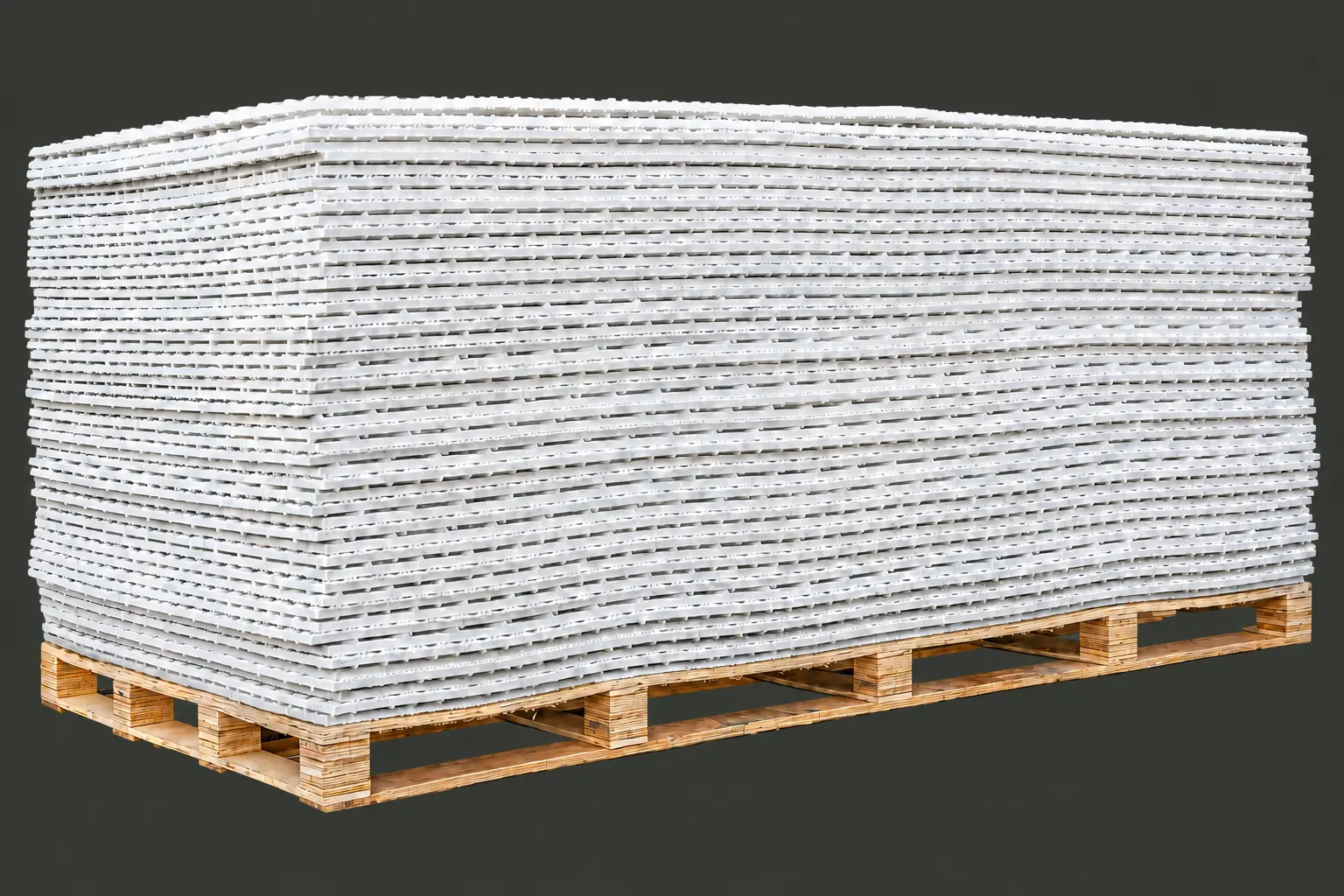
Current ground protection mat prices
GroundMats.shop carries half-inch, double-sided HDPE mats in 3×8 and 4×8 sizes. The price per mat drops as the order grows because larger orders are more efficient to prepare and move.
| Quantity | 3×8 mats | 4×8 mats |
|---|---|---|
| Under 12 | $165 each | $195 each |
| 12–23 | $145 each | $180 each |
| 24 or more | $130 each | $160 each |
Those figures are mat prices before freight and applicable taxes. Because mats are large and normally ship by freight, the final delivered total depends on the quantity and destination ZIP code. That is why a quote based on the actual order is more useful than a flat shipping estimate.
What changes the delivered cost?
Mat size
A 4×8 mat costs more per piece, but it also covers 32 square feet. A 3×8 mat covers 24 square feet and is useful for narrow gates, side yards, and confined approaches. Comparing price per piece without comparing coverage can point you toward the wrong size.
The 4×8 is usually the better fit for primary travel lanes, wider turns, and work areas where equipment needs more room. The 3×8 earns its place when access width is the limiting factor. Many contractors use both: narrower mats to get through a restricted entrance and 4×8 mats once the route opens up. Our 3×8 versus 4×8 comparison goes deeper into that decision.
Order quantity
The quantity break can materially change a contractor’s investment. For example, 24 4×8 mats cost $3,840 before freight and tax at the current $160 tier. The same number bought below the quantity tier would carry a higher per-mat price. If your expected route puts you close to a price break, it is worth checking whether the extra mats would also cover turns, staging, or a second crew.
Freight and destination
Freight is based on the shipment and destination, not just the advertised mat price. Distance, order size, and delivery requirements can all affect the quote. A commercial location that can receive freight may be different from a residential delivery. Send the correct ZIP code and delivery details from the beginning so the delivered number reflects the actual job.
How many mats the route requires
An undersized order may save money on purchase day but leave the crew moving mats constantly or running equipment beyond the protected path. Measure the route, determine whether it needs to be one or two mats wide, and allow extra coverage for corners and working areas. Use the ground protection mat quantity guide before requesting freight pricing.
Purchase price versus cost per job
For contractors, the better comparison is rarely “mats versus nothing.” It is usually reusable HDPE mats versus buying plywood repeatedly, repairing turf, spending labor handling damaged sheets, or limiting equipment access.
A simple cost-per-job calculation is:
Total delivered investment ÷ expected number of uses = estimated mat cost per job.
If a delivered set costs $5,000 and is used on 50 jobs, the purchase portion averages $100 per job. At 100 jobs, it averages $50. This is only a planning example—the actual life and value of any mat set depend on how it is used, transported, cleaned, and stored.
HDPE does not absorb water like wood, and these mats are intended for repeat use. Built-in handholds help crews position them, while four corner holes provide connection points when the layout calls for them. The double-sided tread gives crews a deep-traction side and a lighter-tread side to choose from. For a broader material comparison, read ground protection mats versus plywood.
Do not buy on load rating alone
GroundMats.shop mats are supplier-rated up to 90 tons when the load is evenly distributed under rated conditions. That does not mean every 90-ton machine can cross every lawn simply because a mat is present. Ground condition, tire or track pressure, slopes, voids, transitions, turning forces, and how the load reaches the mat still matter.
These are ground protection mats, not bridging panels. They should not be used to span trenches, holes, or unsupported gaps. If the site has unusual loading or access conditions, the route needs job-specific planning instead of relying on one headline number.
Buying checklist for contractors
- Measure the full access route in feet.
- Confirm equipment width and the width of every gate or restricted entrance.
- Add coverage for turns, staging, transitions, and changing ground conditions.
- Choose 3×8 mats for constrained access and 4×8 mats when broader coverage is needed.
- Compare the order against the 12-mat and 24-mat quantity tiers.
- Provide the actual delivery ZIP code and location type for freight pricing.
- Plan how the crew will transport, secure, clean, and store the mats between jobs.
The bottom line
The lowest sticker price is not always the lowest working cost. The right order is the one that covers your equipment route, fits the property, arrives at a clear delivered price, and can be put back to work job after job. Compare the 3×8 ground protection mats and 4×8 ground protection mats, then send your quantity and ZIP code for an accurate delivered total.